
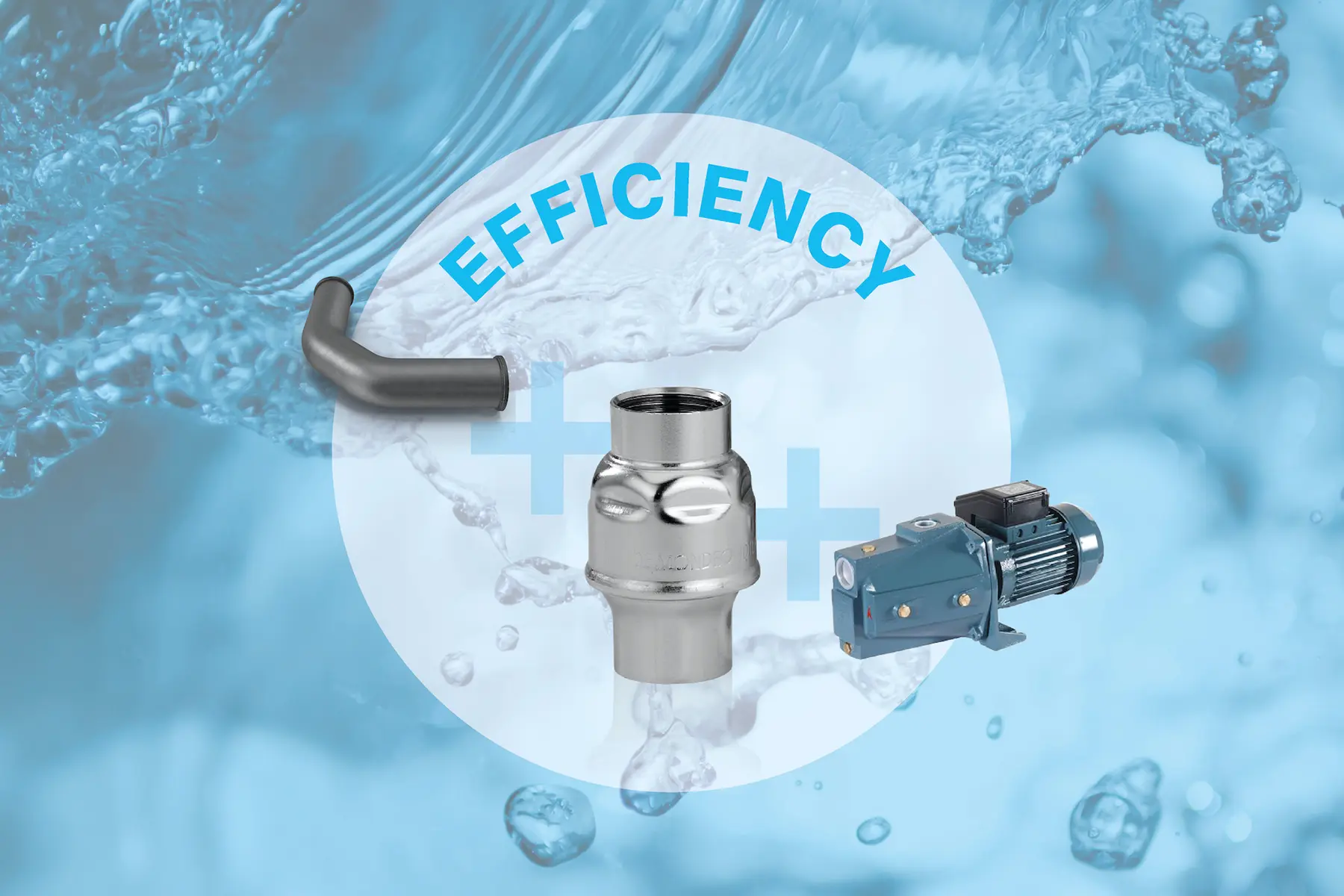
When it comes to efficient hydraulic systems, the focus often falls on electric pumps, since their operation relies on energy consumption. However, limiting optimization efforts to pumps alone is a narrow approach.
True hydraulic efficiency comes from the balance between pumps, valves, and piping, because a hydraulic system is an integrated network in which every component can significantly affect energy use and performance.
The role of valves in hydraulic efficiency
Within a hydraulic system, valves are key components that manage and control the flow of water, air, or other fluids. Their primary function is to intercept the fluid – allowing or blocking passage – but they can also regulate direction, pressure, and flow rate.
Depending on their use, valves can be divided into several families, such as:
- Check valves, which allow fluid to flow in only one direction, preventing backflow and water hammer while reducing stress and unnecessary pump restarts.
- Regulation valves, which balance the circuit and maintain the correct flow rate, avoiding overloads.
- Shut-off valves, which ensure operational flexibility and safe maintenance without compromising system balance.
A valve designed with optimal hydraulic geometry helps minimize localized head loss, reducing pump load and lowering energy consumption.
What are head losses?
Head losses are losses of pressure caused by the resistance the system presents to fluid flow. They can be:
- Distributed losses, related to friction along the entire pipeline.
- Localized losses, caused by valves, bends, fittings, filters, and other accessories.
In both cases, they result in higher pressure demand from the pump, which means greater energy consumption.
Each valve is characterized by a technical parameter known as the flow coefficient (Kv). This indicates the water flow rate (m³/h) passing through the valve with a pressure drop of 1 bar. The Kv value is essential for evaluating localized losses and correct system sizing. For the same flow rate, a valve with a higher Kv offers lower resistance, thus reducing pumping energy consumption.
Hydraulic efficiency is not only about immediate performance but also long-term durability. Using stainless steel ensures maximum corrosion resistance and preserves the hydraulic properties of the system throughout its service life, minimizing maintenance needs.
Piping also makes a difference
The sizing of piping directly affects distributed pressure losses:
- Undersized pipes increase fluid velocity, leading to higher friction and energy consumption.
- Oversized pipes cause unnecessary costs and excessive space requirements.
- Poorly designed bends, joints, and reductions create turbulence and unnecessary resistance.
Proper sizing:
- reduces pressure demand, and therefore pump power requirements;
- optimizes fluid velocity, limiting noise and water hammer effects;
- contributes to stable operation and long-term energy savings.
A systemic approach for greater efficiency and lower costs
In conclusion, hydraulic efficiency is not achieved by improving a single element, but by optimizing the interaction among all components. A high-efficiency pump can lose much of its benefit if installed in a system with poor-quality or poorly sized valves and piping.
On the other hand, investing in a complete system design where valves, pumps, and piping are engineered as one integrated solution, ensures real energy savings, lower operating costs, and greater overall system reliability.
Discover our range of stainless-steel check valves designed for maximum hydraulic efficiency.