
What is AISI 304 Steeland why is It so widely used?
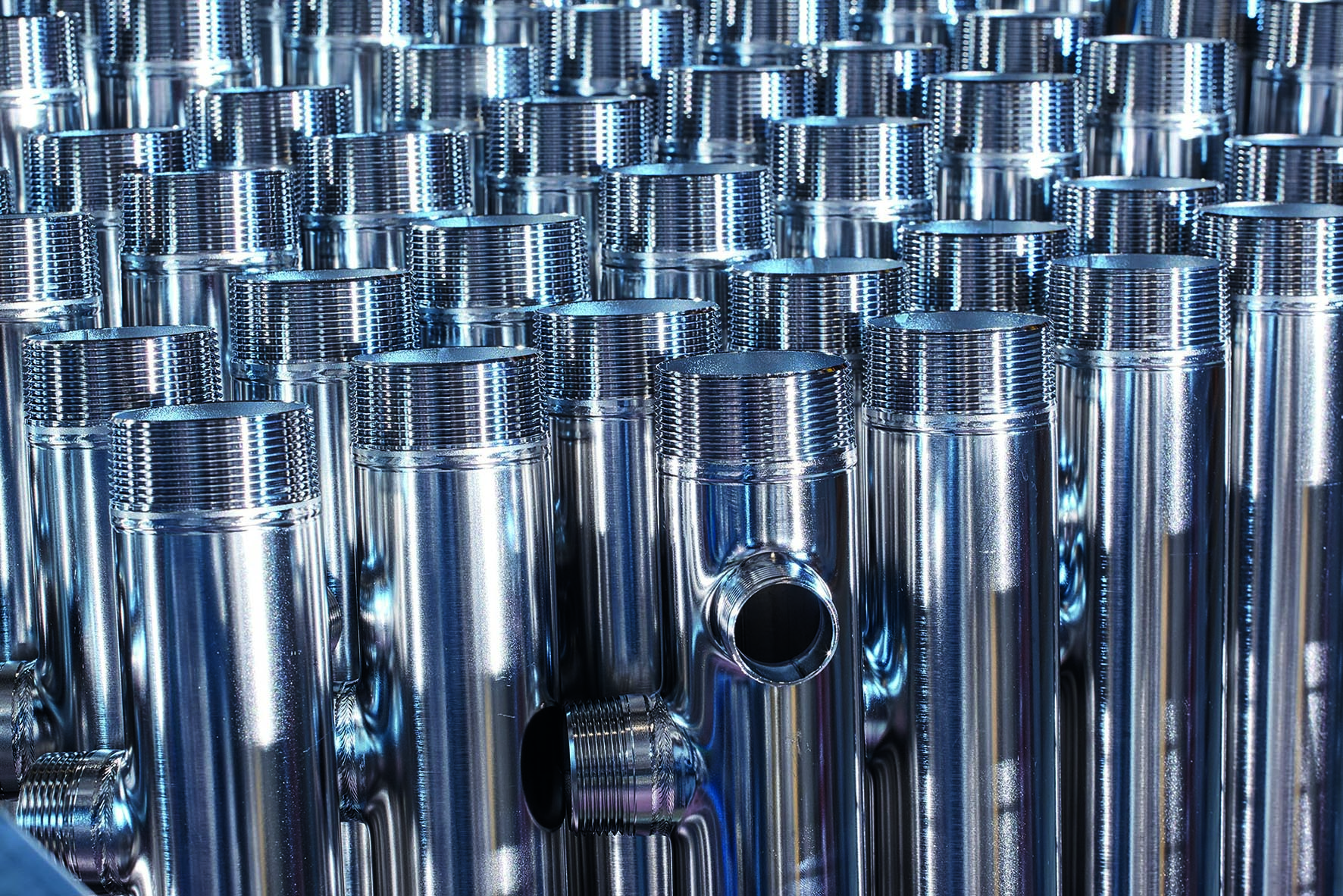
AISI 304 steel is one of the most widely used alloys in the world of stainless steel, chosen daily for thousands of applications thanks to its remarkable combination of strength, workability, and long-term durability. Even in hydraulic systems, it offers many advantages—it’s no coincidence that Mondeo has chosen it, along with AISI 316, to produce its products: valves, filters, manifolds, and fittings.
Although often seen as a “simple” material, stainless steel 304 features a sophisticated chemical composition designed to deliver high performance across a broad range of contexts.
The role of chromium and the passivation phenomenon
The corrosion-resistant properties of stainless steel are primarily due to the presence of chromium in quantities greater than 11%. This is a common characteristic of all stainless steels, which can be divided into three main groups: martensitic, ferritic, and austenitic. Both AISI 304 and AISI 316 are austenitic stainless steels and are characterized by a chromium content of 18%, which is higher than that found in ferritic and martensitic stainless steels.
Why is chromium so important? Because it can spontaneously form a very thin and invisible layer on the steel’s surface, known as a passive film. This film protects the material from external agents such as moisture or chemicals, preventing rust formation. This is what gives this extraordinary material its key strengths: corrosion resistance and maximum hygiene.
Composition and advantages of AISI 304
In addition to chromium, AISI 304 also contains a significant percentage of nickel (8%), which improves the alloy’s ductility and stability. This makes the steel extremely easy to process—it can be bent, welded, stamped, or machined with precision without losing structural integrity. Thanks to these properties, AISI 304 is widely used in very diverse sectors, from furniture to the food industry, from marine to industrial systems. Companies like Mondeo choose it precisely for its reliability and versatility.
The Difference with AISI 316 Steel
AISI 304 and AISI 316 share the same percentage not only of chromium but also of nickel. The difference lies in the presence of molybdenum. This element, found only in AISI 316, provides additional protection against corrosion, especially in aggressive environments such as those with salt or chlorides. That’s why AISI 316 is often preferred in marine or chemical environments. However, this doesn’t mean it’s always the better choice: for instance, in environments with nitric acid, AISI 304 actually offers better performance.
How to Identify the Two Types of Steel
There are specific tests to detect the presence of molybdenum and thus distinguish AISI 304 from AISI 316. Typically, a small area of the material is lightly sanded, and a few drops of reagent are applied. If the liquid changes color from yellow to brown, molybdenum is present, indicating the material is likely AISI 316. It should be noted, however, that these tests are not quantitative—even small traces of molybdenum can cause a reaction, without necessarily confirming the content is sufficient to classify the material as true AISI 316.
When to Choose AISI 304
Despite the existence of more “robust” variants like AISI 316, AISI 304 remains the most suitable and cost-effective solution for most everyday applications. It is strong, durable, easy to process, and offers excellent value for money. For this reason, it continues to be the go-to material for many companies, who rely on it as a trustworthy foundation for creating high-quality products built to last.