
Isolating network sections to ensure safety, enable maintenance, or manage the opening and closing of circuits—whether through sporadic operations or repeated cycles multiple times a day—are essential requirements in any water distribution network, HVAC system, or process plant.
This task is performed by shut-off valves, components whose presence in systems grows in direct proportion to the extension of the network and the need to make individual sections accessible.
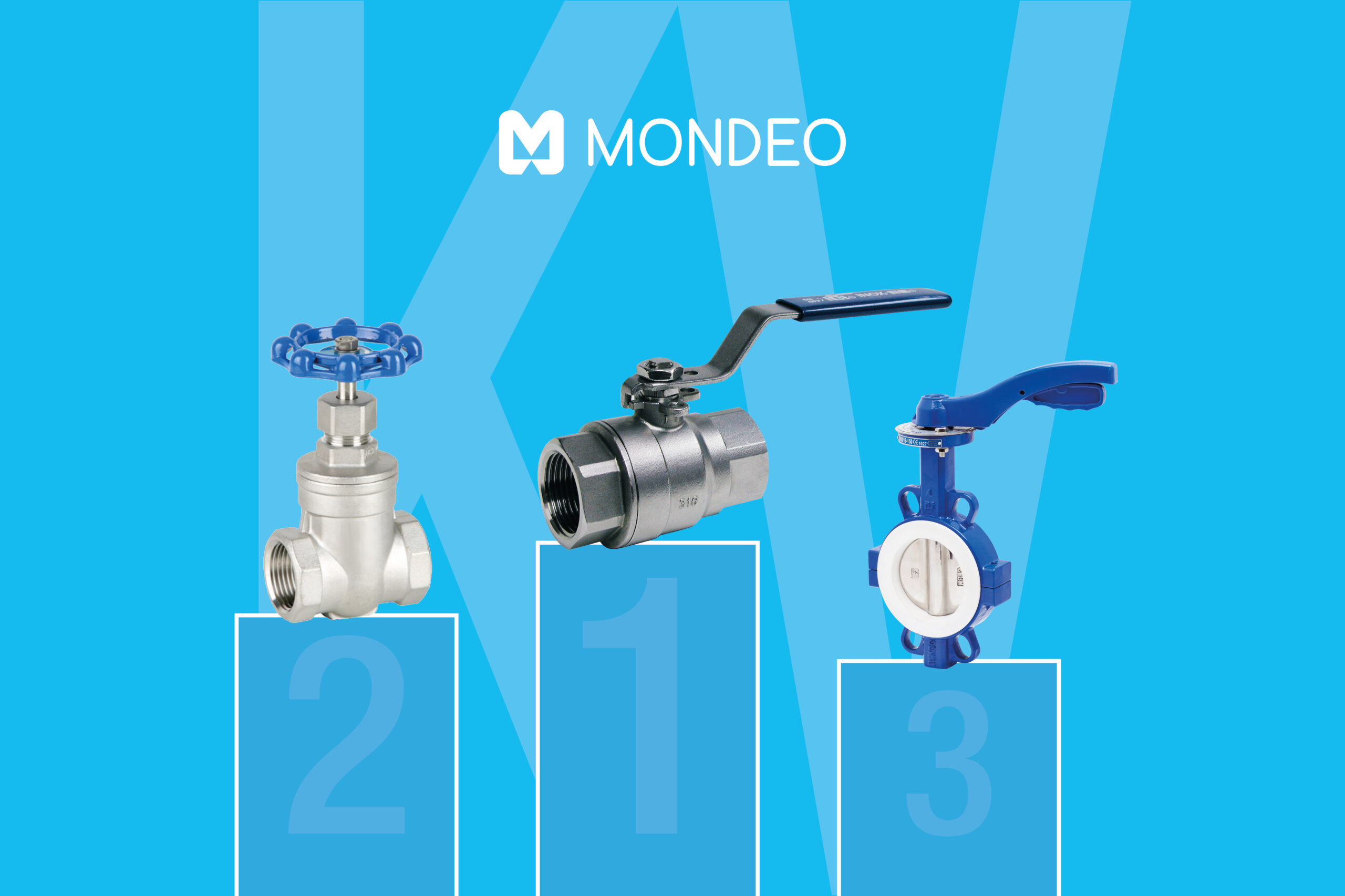
However, there is no single universal solution. The main types—ball, butterfly, and gate valves—differ in their internal construction and actuation methods. To guide the selection process, one typically starts with the application’s constraints: fluid type, operating pressures and temperatures, operating frequency and speed, as well as the space available for installation and maintenance.
Yet there is a less obvious parameter that is decisive for overall efficiency: head loss when the valve is fully open. Even in the fully open position, the internal geometry of the valve resists flow, generating a localized head loss. Because dozens of valves are often installed in series along the same circuit, these resistances add up, increasing the energy required by the pumping systems.
In this respect, ball, butterfly, and gate valves offer very different performance levels: for the same nominal diameter (DN), the flow coefficient (Kv) and the resulting head losses vary considerably.
The hydraulic comparison: which shut-off valve is most efficient?
When analyzing behavior in the fully open position, the three main technologies can be ranked on a true scale of hydraulic efficiency, from the lowest to the highest generated pressure drop:
- Ball valves (full bore): Offer the highest hydraulic efficiency. In the open position, the internal bore of the ball aligns perfectly with the pipe diameter, creating a continuous, unobstructed conduit. The fluid passes through the valve without deviations or restrictions, significantly reducing localized head loss.
- Gate valves: Deliver excellent hydraulic performance, very close to that of ball valves. When the wedge gate is fully raised, the flow channel is clear and straight. The only slight resistance comes from the internal cavities housing the gate, which can generate minimal turbulence.
- Butterfly valves: Introduce the greatest resistance to flow. Even in the fully open position, the shut-off disc remains positioned in the center of the flow cross-section, parallel to the flow direction. This physical obstruction reduces the effective cross-sectional area and splits the flow, causing significantly higher head losses compared to the other two types.
Design tips for an informed choice
Comparing the hydraulic behavior of different technologies therefore becomes a fundamental step in curbing a system’s energy consumption.
The butterfly valve is a mandatory choice for large diameters and in contexts with severe volume or weight limitations. However, there is a gray area where ball valves and butterfly valves compete against each other (also sharing a rapid actuation capability). In this territory, automatically choosing a butterfly valve as soon as a certain diameter is exceeded (starting from DN 50–65) is often a habit tied strictly to the initial purchase price that ignores operating costs. A butterfly valve is initially cheaper than a ball valve, yet replacing a butterfly valve with a full-bore ball valve allows you to significantly cut down localized pressure drop. Comparing a ball valve and a butterfly valve, both at DN 50, the pressure drop in the former is over 80% lower.
Finally, a note on the gate valve. More efficient than a butterfly valve but less so than a ball valve, it is the ideal choice for dirty liquids or fluids with suspended solids. It is not suitable for frequent cycles requiring rapid opening or closing, given the slowness of the operation, which requires several turns of the handwheel. However, this limitation turns into a strength when the main objective is protecting the system from the risk of water hammer.
Discover Mondeo shut-off valves